
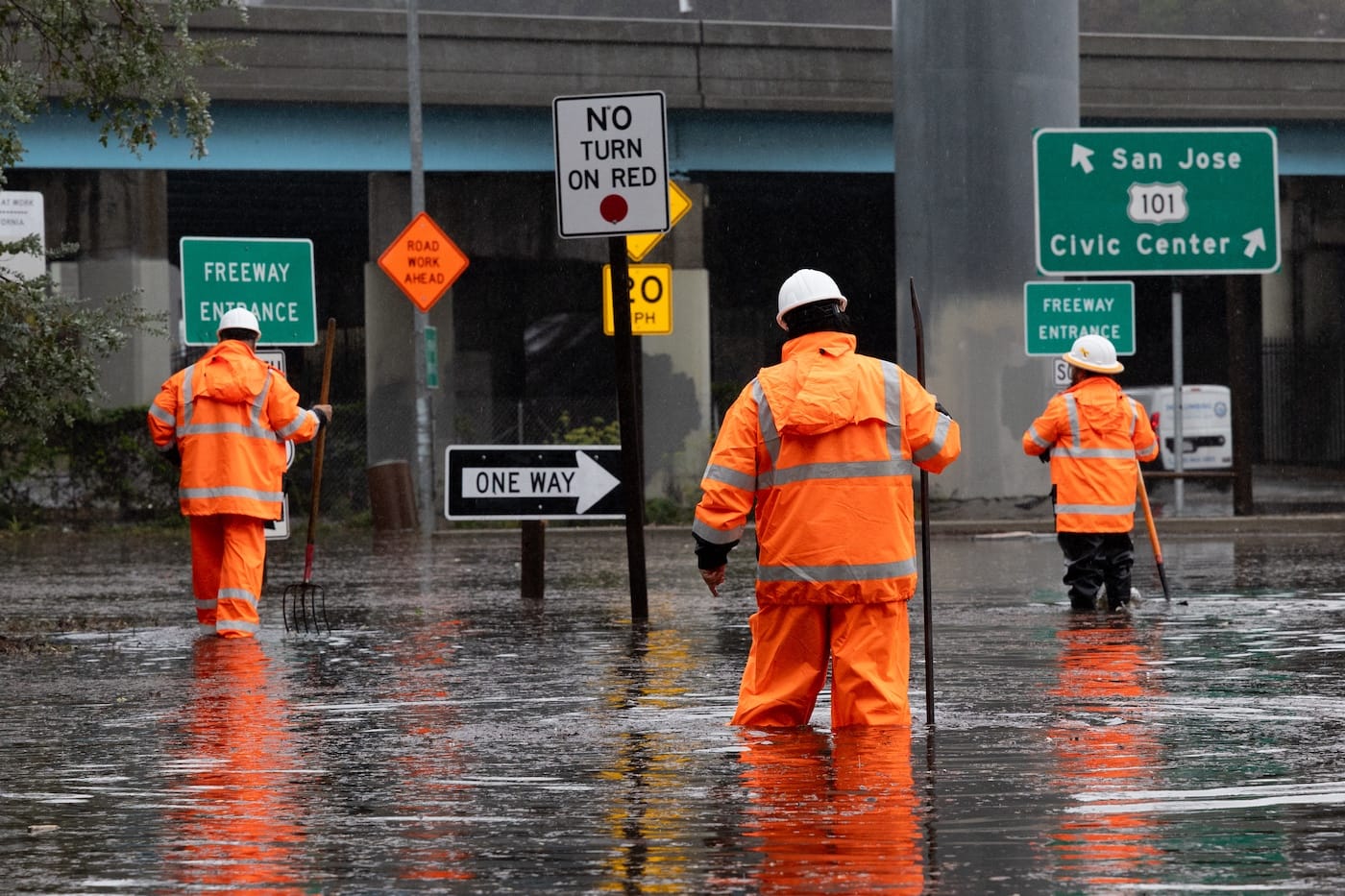
Many of the record number of 911 calls during Wednesday's downpour involved storm-related problems better suited for 311, as the city works to prevent further flooding and encourages residents to help keep its 25,000 storm drains clear.
The city received a record number of 911 calls during the heaviest rainfall Wednesday, according to SF Department of Emergency Management Executive Director Mary Ellen Carroll, as NBC Bay Area reports. SF Fire Chief Dean Crispen told the outlet the department alone received about 340 calls that morning, roughly twice its normal volume. Reports included downed trees, wires, and dislodged manhole covers.
Wednesday's rainfall reportedly broke a century-old record in San Francisco, with downtown receiving about 2.18 inches by 2 p.m., nearly matching the city's average rainfall for the entire month of November.
According to NBC Bay Area, officials reminded residents that 911 should be reserved for emergencies involving immediate threats to life and safety, while storm-related problems such as downed trees and clogged storm drains should generally be reported to 311. Residents should never approach downed power lines.
The city has been preparing for the storms by clearing storm drains, distributing sandbags, and installing temporary flood barriers in particularly vulnerable areas. San Francisco Public Works spokesperson Rachel Gordon told ABC 7 that crews had cleared about 80 storm drains in the days leading up to Wednesday's storm. The department has also been distributing sandbags six days a week and has reportedly stockpiled 35,000 for residents.
One of the city's longest temporary flood barriers was reportedly installed at 17th and Folsom streets, near one of San Francisco's lowest inland points. The area is prone to flooding, as shown on the SF Public Utilities Commission’s (SFPUC) 100-Year Flood Map, and nearby businesses rely on pumps and other equipment to keep floodwaters out.
Residents can also help by participating in the city's Adopt-a-Drain program, which enlists volunteers to take responsibility for keeping a nearby storm drain free of debris. San Francisco has approximately 25,000 storm drains, with 8,127 currently adopted.
SFPUC recommends clearing debris from the top of the drain grate and the gutter extending about 10 feet in either direction, ideally before rain begins and again after a storm. Volunteers should not lift grates, reach underneath them, or attempt to clear drains during active storms. Anyone who encounters a completely clogged drain with water pooling in the street or on the sidewalk should report it to 311 rather than trying to clear it themselves.
The city's stormwater system is designed to move rainwater through street drains and underground pipes, but its capacity can be overwhelmed during intense rainfall. In much of San Francisco, stormwater and sewage share the same underground system, meaning heavy rain can increase the volume of water that must be transported and treated. The city monitors the system ahead of storms and deploys crews to address blockages, while continuing to monitor conditions during and after heavy rainfall.
San Francisco's flood map identifies areas vulnerable to flooding, including locations with a 1% annual chance of flooding, commonly referred to as the 100-year floodplain. That designation does not mean flooding happens only once every century. It describes the statistical likelihood of flooding in any given year, and multiple such events can occur within a much shorter period.
Mayor Daniel Lurie urged residents to stay off the roads unless necessary, avoid driving through standing water, and keep away from downed power lines, per NBC Bay Area. With more heavy rain expected during Thanksgiving week, he warned that Wednesday's storm could be an early indication of a long, wet El Niño season.
"If you don't need to be out, please stay in," Lurie said.
Related: SF Helps Residents Prepare For El Niño Flooding With ‘Sandbag Saturdays’ Giveaways


