From Philly and the Pa. suburbs to South Jersey and Delaware, what would you like WHYY News to cover? Let us know!
Philadelphia primary care physician Dr. Tara Cuda sits in an exam room with her patient, Betty Jean Tscherniawsky, 65, who has Type 2 diabetes and takes insulin to regulate her blood sugar.
She’s looking at a detailed report on Tscherniawsky’s blood sugar levels for the past two weeks.
“Forty-four percent of the time, you’re out of range, you’re too high,” Cuda says, pointing at the numbers on her computer screen. “It shows 2%, you’re low. So, I want to know, when your sugars are low, are you having any symptoms?”
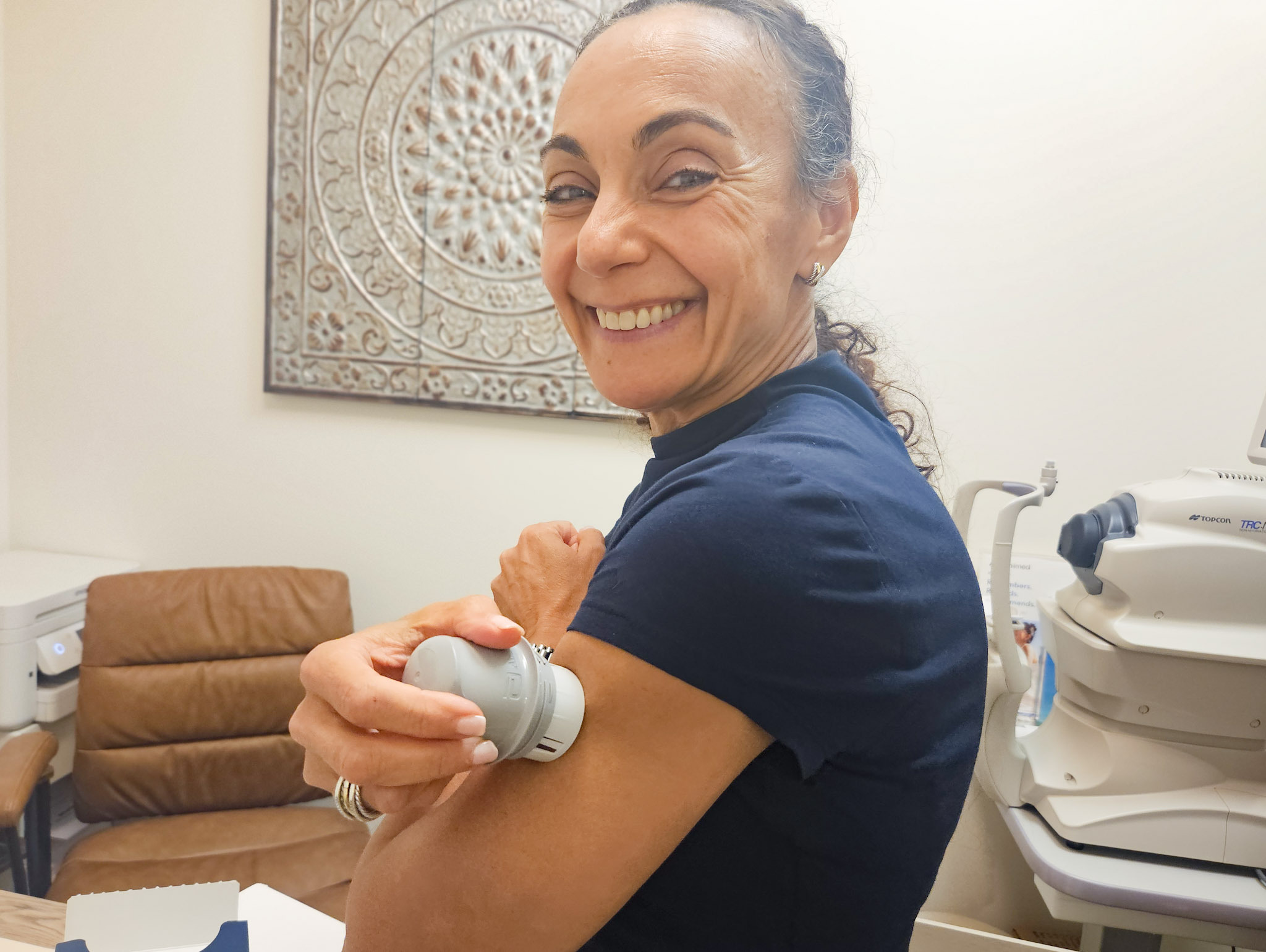
This real-time blood sugar data comes from Tscherniawsky’s continuous glucose monitor, or CGM. It’s a small, round device that she applies to her upper arm. It implants a thin needle sensor into her skin that measures the amount of sugar, or glucose, in her blood.
Tscherniawsky relies on the data to help her make healthy eating choices throughout the day.
“That’s how I know I can eat strawberries, because they don’t do a spike. So, I snack more on that,” she said. “But I was doing a protein drink and it was really messing me up. It said it had no sugar or anything, but it was really spiking my sugar.”
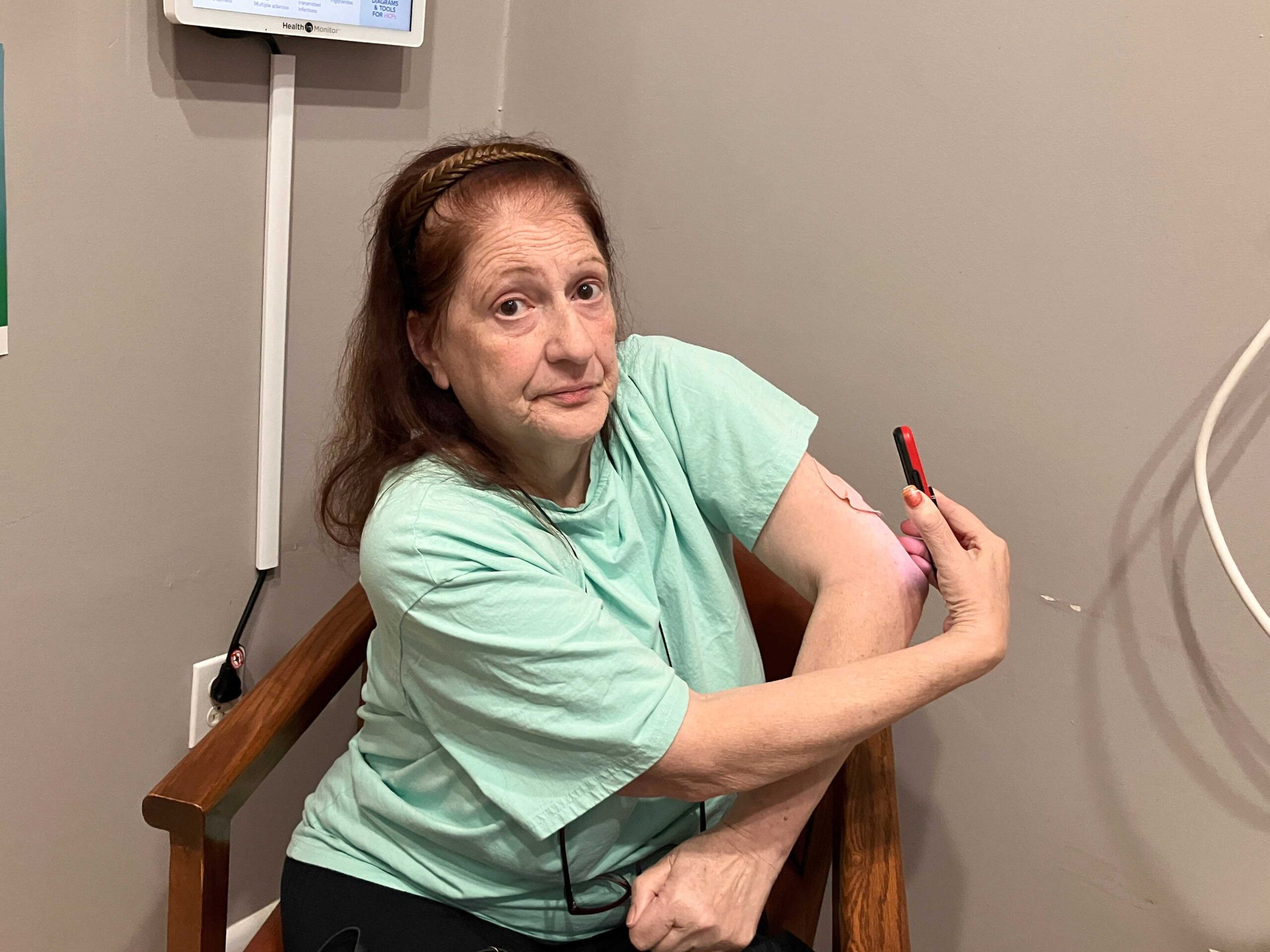
Tscherniawsky, who lives in South Philly, has had Type 2 diabetes for at least 27 years. She’s used insulin on and off to help her manage the chronic disease. But in the past, when she didn’t have a CGM, she had to prick her finger to test her blood sugar multiple times a day.
“And a lot of times you didn’t want to do it, because it hurt. Whereas this, no problem,” she said, gesturing to her CGM. “You can [check] it 10, 12 times a day. It don’t bother you.”
Cuda is the one who introduced Tscherniawsky to CGMs. Her practice uses a value-based care model through Aledade, a health care company that partners with independent practices. Traditionally, health care runs on a fee-for-service model, where doctors are paid for visits and tests they perform. With value-based care, doctors are paid based on the quality and outcomes of patient care. It also allows Cuda and her team to have more frequent visits with her patients to answer questions, flag issues and make sure they’re managing their illness.
Cuda says the real-time blood sugar data helps her make treatment plans and helps her patients become more engaged in lifestyle changes.
“It allows the patients to recognize what foods are detrimental to their health,” she said. “For Betty, she definitely was not following a good diet previously, and I think she’s getting on the right track. More engagement, and I think I’m very confident these sugars are going to improve. They already have.”
New research shows that when primary care clinicians initiated CGM use for adults with insulin-treated diabetes, patients saw significant improvements in hemoglobin A1c levels, which is an average of blood sugar levels from the previous two to three months.
The study, published in the Journal of the American Medical Association this summer, also found associated reductions in hospitalizations and emergency department visits.
The findings support expanding CGM implementation in primary care settings to improve diabetes outcomes, researchers wrote. Doctors in Pennsylvania say they’ve been ramping up the use of CGMs in recent years as they see a need in their communities.
“They need, yes, the counseling, the nutrition, the support,” said Dr. Christine Meyer, who co-owns a primary care practice in Exton, Pennsylvania. “But they also need things like continuous glucose monitors, which have been a game changer in the treatment of diabetes.”